Bounty hunters operate with inconsistent oversight as mistakes raise questions about the industry
Rogue Roundups: Fugitive recovery agent association calls for more regulation
BATON ROUGE, La. (InvestigateTV) — The hair on the back of Alan Hutson’s neck still stands up when he thinks about that terrifying night in North Louisiana several years ago.
It was supposed to be a routine evening — one where he would take into custody an individual who had skipped a court date while awaiting trial.
Instead, the night ended with a shotgun pointed at his face.
“I come walking around the side of the house. Grandma or mom raise up a double barrel shotgun from behind dad and goes ... ‘Where’d you come from?’” Hutson said, recalling the harrowing scene. “I pretty much froze at that point.”
After diffusing the situation, Hutson managed to take the fugitive he was looking for into custody, but recognized just how much danger he was actually in.
“I was very glad to make it home that night,” Hutson said.
Hutson and his wife, Michelle, are among the nation’s estimated 15,000 fugitive recovery agents, also known as “bounty hunters,” who are tasked with locating individuals who abscond from court while out on bond.
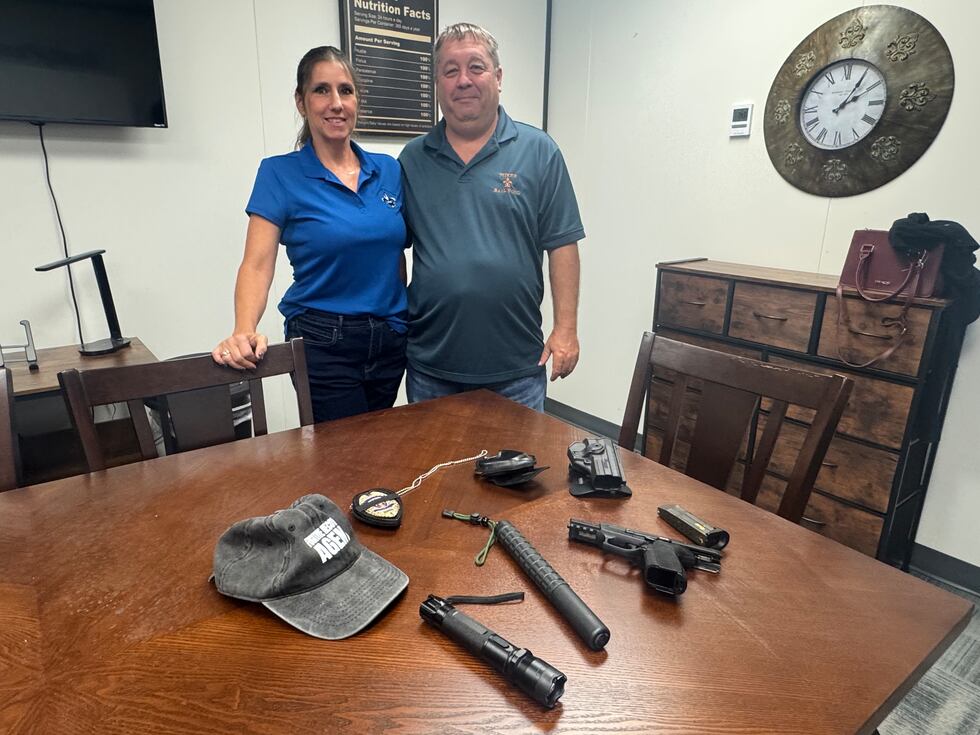
Over the decades they’ve been in the industry, the couple said they’ve relied on a pragmatic approach, prioritizing patient surveillance over confrontation.
But not all of their colleagues operate that way.
Across the country, reports of bounty hunters kicking in doors of the wrong house, using unnecessary force and even discharging weapons without cause have raised concerns about accountability.
“There are a lot of bounty hunters or alleged bounty hunters that have made mistakes that have caused the industry a bad name,” said Michelle Hutson, the second-generation recovery agent who’s expressed frustration about how such events have tainted the industry she loves.
InvestigateTV found regulations for bounty hunters vary greatly across the United States, which some experts say could lead to dangerous situations where fugitive recovery operations go awry.
Wrong house raids
In states that permit commercial bail bonding, a defendant unable to personally afford their bail can be released from custody by contracting with a bondsperson or company.
Similar to a co-signer on a loan, the bond issuer takes responsibility for ensuring the defendant returns to court — essentially offering the amount of the bail as collateral in exchange for a fee, meaning if the defendant fails to appear, the bondsperson or company risks forfeiting the bail amount.
When this happens, bond issuers can either find the defendant themselves or employ the services of a “bounty hunter,” a moniker coined by 1950s Hollywood Westerns.
In recent years, however, the image of those recovering fugitives has, for many, turned from vigilante hero to rogue outlaw.
“Across America, Arizona, California, you hear all these horror stories of quote-unquote bounty hunters going into wrong houses, wrong apartments, wrong trailers, and some of it becoming fatal,” Alan Hutson said.
InvestigateTV indeed found reports of such raids from coast to coast, where cases of mistaken identity or location led to violent confrontations:
- In Dallas this year, police locked up three bounty hunters on felony charges, accused of arresting and kidnapping the wrong man.
- In Louisiana, police arrested three bounty hunters in August, charging them with felonies after they allegedly kicked in the door of an LSU graduate student. She reportedly locked herself in the bathroom of her apartment, and prosecutors say they kicked that door in too before realizing they were at the wrong apartment.
The Hutsons said these types of incidents are particularly frustrating because there are several things fugitive recovery agents can do to make sure they are at the right place. Michelle Hutson said she is especially careful when looking for suspects to make sure she and her husband are at the correct house.
“Getting a pizza box and going up to the door and telling them to ask for who ordered the pizza, and they didn’t, but found out that’s the right person,” Hutson said. “We’ll lock them up.”
When weapons are involved, the tension only grows. In New York, an unlicensed bounty hunter was sentenced to two months in prison after he went into the wrong duplex armed with a long gun. In Houston, a 2021 raid at the wrong place resulted in shots fired and three bounty hunters being arrested.
“If you’re not 110% sure the person you are looking for is behind that closed door, you don’t go in,” Alan Hutson said. “That was one of the things, Mike, my father-in-law taught us as we were learning the business. Do not ever just guess. Guessing can either get you killed or get you arrested.”
Problems persist even at the correct address
Even when recovery agents are in the right place, things can still go wrong:
- In St. Louis, a jury convicted a bounty hunter for kidnapping a woman wanted for misdemeanors in Louisiana. Prosecutors said he pulled her from a home in Missouri without informing local law enforcement and without a Missouri license. The individual initially appealed, but ultimately pleaded guilty again and was sentenced to three years in prison.
- Earlier this year, a Dallas man was shot and killed when the two bounty hunters pursuing him opened fire. The two were charged with murder after prosecutors said they fired with no credible threat to their safety.
For the Hutsons, they believe many of these problems that occurred while at the right address are attributed to the approach.
The Hutsons said they believe many confrontations often boil down to a lack of training or experience causing adrenaline and emotion to get in the way.
“If you’re one of those that are just going to cuss them out or belittle them or accuse them or whatever, you’re going to get a lot in return,” Michelle Hutson said.
But the training required to become a bounty hunter — as well as many other requirements and guardrails — vary greatly depending on where you are.
Inconsistent regulations nationwide
InvestigateTV found a patchwork of regulations exists across the nation when it comes to bounty hunting.
Illinois, Kentucky, Massachusetts, Oregon and Wisconsin have completely or effectively outlawed the practice of commercial bail bonds and fugitive recovery by either banning the practice altogether or restructuring the bail system.
More than a quarter of states have no specific statutory language regarding bounty hunters, and a handful of others lump fugitive recovery in with the regulation of bail bonding, requiring a bail bond or private investigator license to arrest defendants.
Where regulations exist, recovery agents are often required to obtain a license, which in many cases is issued by the state’s insurance department. License requirements generally include having a record clear of any felonies or significant misdemeanors and passing a background check.
However, when looking at the regulations around the conduct of recovery agents, InvestigateTV found the rules can vary wildly from state to state.
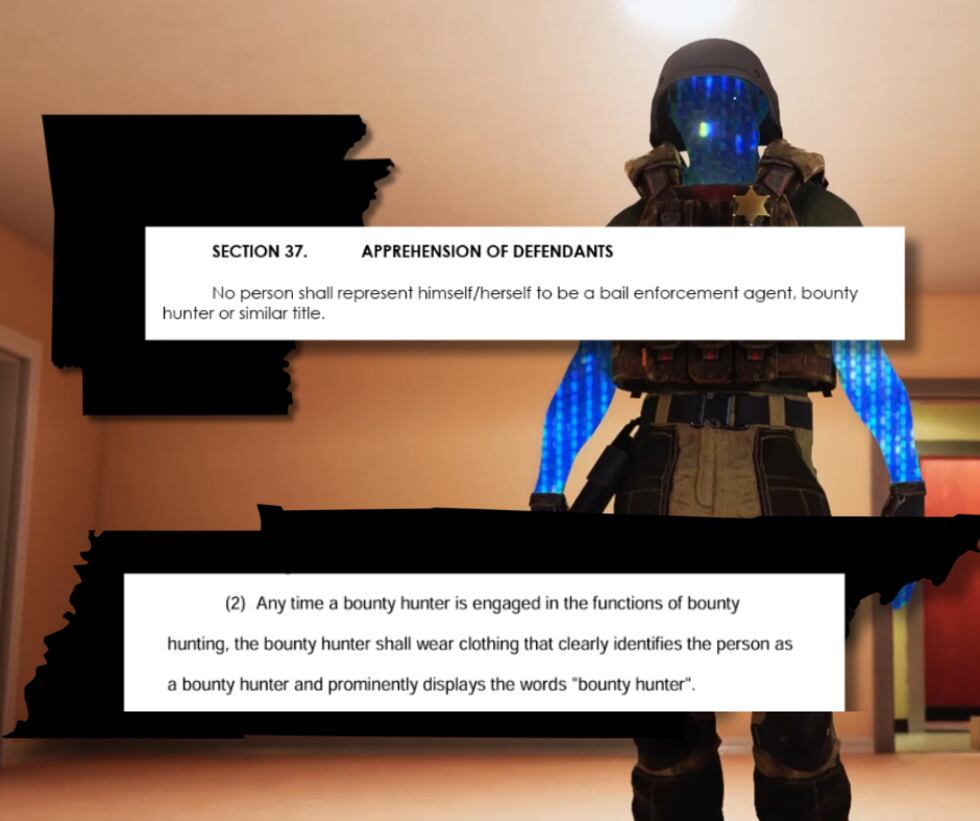
For example, in Arkansas, it is illegal to identify yourself as a “bounty hunter,” but in neighboring Tennessee, that title must be prominently displayed on an agent’s clothing.
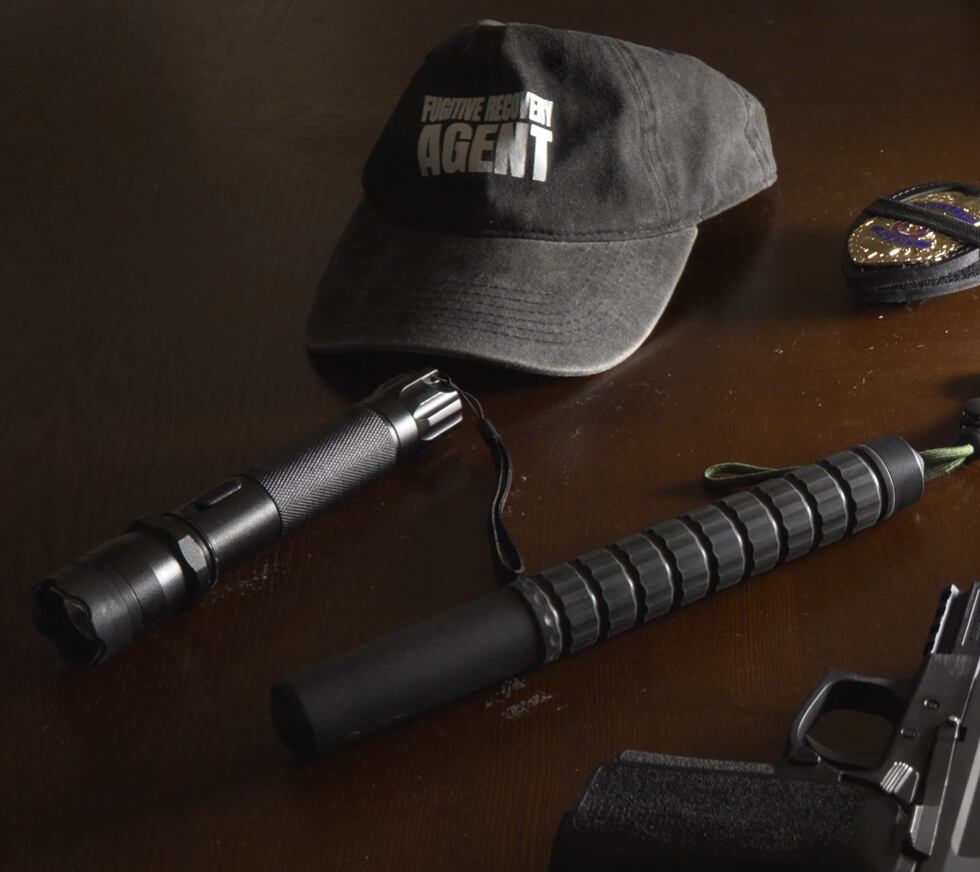
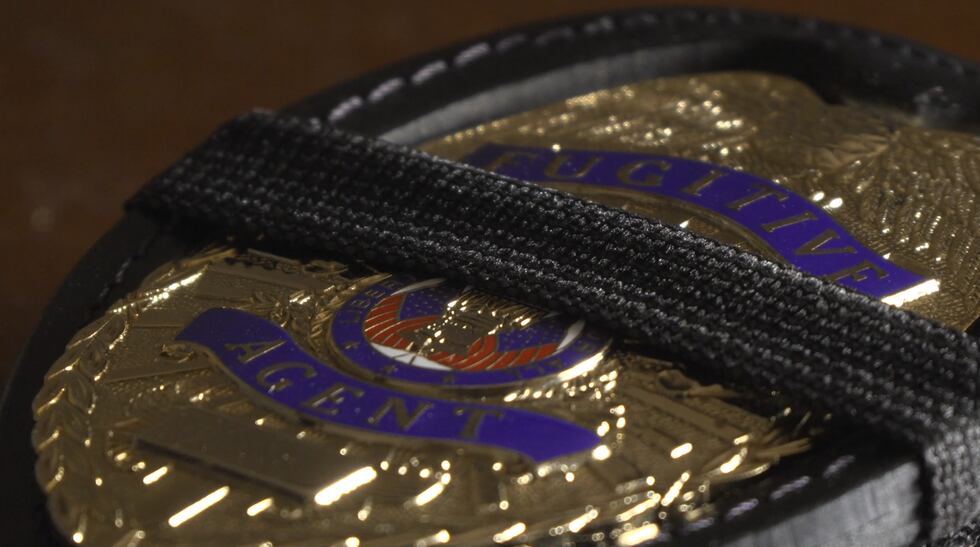
Some states allow agents to wear tactical gear, use identification that looks similar to a police badge and carry firearms strapped to their side.
Some experts say this can make bounty hunters potentially appear to the public like law enforcement but operate without the same training and guardrails.
“They need to be regulated and not be allowed to wear that kind of stuff or go in guns blaring going in what’s called ‘hot,’” said one member of the National Association of Fugitive Recovery Agents (NAFRA).
The member, who asked to remain unidentified due to the nature of his work, said he and others in the trade organization for the bail bond fugitive recovery industry would like to see a federal mandate blocking bounty hunters from dressing up as police, something that only a handful of state regulations directly address.
Seeking consistency
It isn’t just the issue of appropriate gear or what agents are called that many in the industry want to see improved.
“What I think needs to change is regulation of fugitive recovery agents in general,” the NAFRA member said.
NAFRA President Chuck Jordan agrees.
“We have advocated to try to have some consistency in regulations throughout the United States. You know in some states they are lightly-regulated or you know not regulated at all for the most part,” Jordan said.
For years, Jordan said he’s been trying to get more uniform standards on the books, pointing to states such as Connecticut and Delaware — which have requirements such as notifying local law enforcement of apprehension attempts and state-issued ID cards — as blueprints for regulations that, if applied nationwide, could stop what’s been happening from coast to coast.
“It would be helpful to have consistency…between the different states,” he said.
Jordan said his organization has even approached members of Congress about making changes, but said his push fell on deaf ears, with lawmakers reportedly uninterested in pushing change on a two-billion-dollar industry.
Self-regulating the industry
With no federal regulations on bounty hunting and a lack of uniformity state to state, the broader effort to wrangle bad actors falls back on those who are their colleagues.
Jordan said NAFRA can and will revoke membership in their organization if someone is convicted or accused of excessive force or if an individual is arrested and charged with misconduct related to their work.
“There’s about 20 people nationwide that are suspended or revoked as far as their memberships go,” Jordan said, explaining that many of those actions were the result of complaints submitted to the organization.
“That’s something that we keep internally, and then somebody would have to make an inquiry to you know check to see if they were in good standing you know in order to learn that information,” Jordan said.
In theory, he said, the list would prevent cases where someone who gets in trouble for improper behavior in one state is able to go elsewhere and continue working, because state regulators could check with his organization before licenses are issued.
But Jordan said that doesn’t happen. “We would certainly be open to that,” he said, “but normally if we have a contact from the government, it’s somebody in law enforcement...[because] there’s been some sort of issue and they’re asking us if this person is a member in good standing.”
For Alan Hutson and his wife Michelle who work on the front lines, they strive to be careful and aware. In addition to triple-checking they’re in the right place and treating people with respect, the Hutsons said they always carry a court order in hand when they are searching for someone who skipped their court date.
“That way, if local police do show up, we’re covered. We don’t have any issues,” Alan Hutson said.
But across the board, the couple said they think there needs to be better oversight of the industry — and a commitment by the industry to remain accountable.
“You don’t run somewhere thinking you know best [when] you don’t know best,” Alan Hutson said. “That’s either going to get you killed or somebody else is going to get killed. And we don’t want that bad stigma on the recovery agent’s name.”
“You’re there to get them because they ran,” Michelle Hutson said.” They didn’t show up in court. But you don’t have to go in destroying property to find people. That just makes situations worse.”
According to NAFRA, it’s estimated that bounty hunters apprehend 30,000 fugitives each year. While they work for profits, supporters say their help streamlines the criminal justice system to keep things on track.
“We’re saving taxpayers money. They’re not paying us the way they are paying the salaries of law enforcement and having to hire more law enforcement to try to catch up on this backlog of warrants that would get worse without us,” Jordan said. “We do serve a valuable purpose.”
Associate Producer Jacob Spudich contributed to this report.
Copyright 2025 Gray Media Group, Inc. All rights reserved.