Big-rig blowouts highlight safety tech gap on US highways
Tire problems are the top reason large trucks are pulled off the road, yet monitoring systems are not required
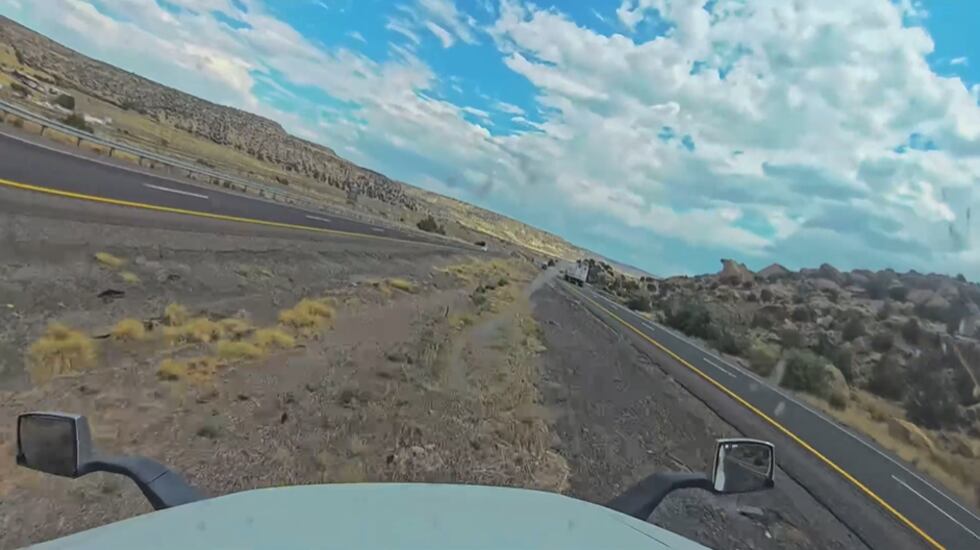
(InvestigateTV) — It was a clear summer afternoon when an 18-wheeler headed east on a rural stretch of Interstate 40 in New Mexico suddenly careened to the left, barreling across the grassy median.
More than 1,200 miles away in California, Derick Walsh had no way of knowing how the trajectory of that large truck would forever alter his own.
“I’ve been attempting, you know, to get back to some level of normal — normalcy, but I don’t know,” Walsh said as he reflected on that fateful day in July 2023. “It’s, it’s never going to be the same ever again.”
Dashcam video shows the tractor trailer lurched before crossing the median into westbound traffic, where it violently collided head on with a white sedan.
In the car were both of Walsh’s parents, his sister and her dog, Galaxy. All of them were killed in the crash.
“I’ve been, you know, attempting to work through some of the things that still haunt me to this day,” Walsh said, but added, solemnly: “I’m still in hell, I’ll be honest with you.”
According to the police report, the left front tire of the 18-wheeler experienced a “blowout” that resulted in the crossover collision.
Though detailed national data is limited, InvestigateTV was able to identify hundreds of fatal large truck crashes across three years, including 2023, where the blame was placed or partially placed on a problem with a tire.
“If you don’t have proper tires on an 80,000-pound truck, that can really affect the ability of the truck to stop when it needs to,” said Peter Kurdock with the non-profit Advocates for Highway and Auto Safety.
In a lawsuit, Walsh and his attorneys allege the tire that failed was defectively manufactured, but InvestigateTV found hundreds of thousands of trucks are cited by federal regulators each year for the condition of their tires — deficiencies that could lead to crashes like the one that killed Walsh’s family.
And while technologies exist that could alert truck drivers to potentially dangerous tire conditions, industry experts say they are often not required or not widely used in large trucks.
‘They were just great people’
Walsh grew up in Indiana with his parents, Michael and Angela Walsh, and his younger sister Jessica in what he describes as a quintessential American family.
“I mean, we were just really close,” he said “We’d have dinner every night together. Went to church every Sunday.”

Walsh said his parents had just reached a lifelong goal of buying a lakeside cottage following his dad’s retirement after decades of work as an engineer.
“My parents really cared about me and my sister. I mean, they were just great people,” he said.
Jessica Walsh attended Arizona State University where she studied meteorology and astrophysics. She had worked with NASA conducting lunar mountain research which had carried over into the pursuit of a doctoral degree.
“She was super smart and she was really driven, and she inspired me a lot,” Walsh said.
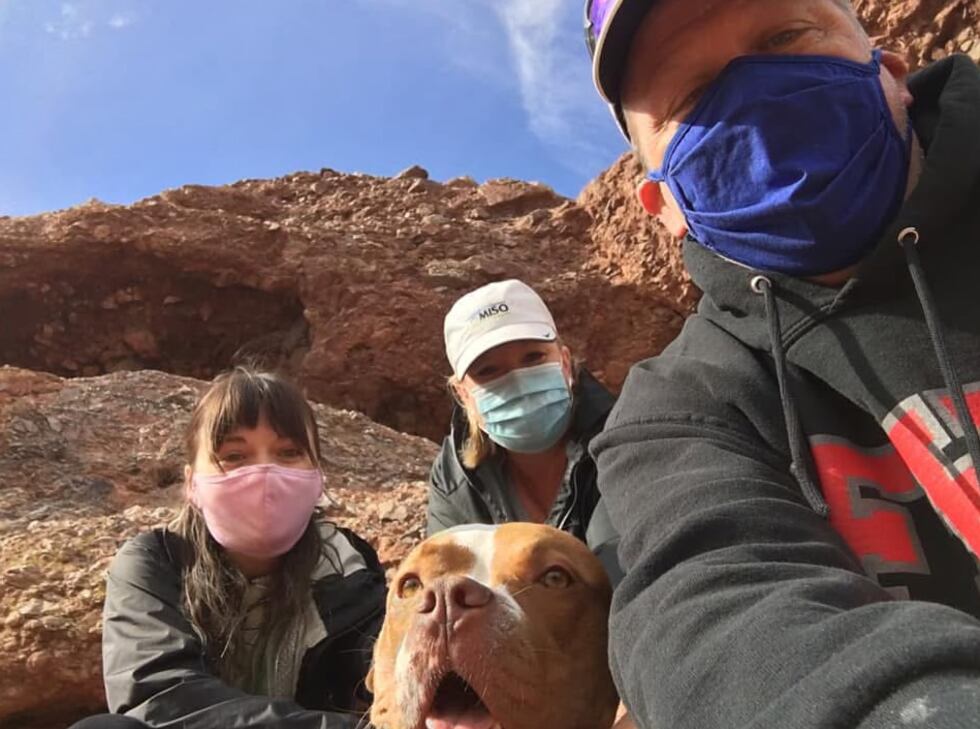
On July 18, 2023, Michael and Angela were accompanying Jessica on the long drive back to Arizona from the family home in Indiana, a trip that took them west through New Mexico on Interstate 40.
Walsh was in wildland firefighter training in California when he said a friend called him in tears.
“I knew when he was crying that something was very wrong because he’s never cried to me before. Ever,” Walsh said.
Walsh said the friend could only tell him he needed to call his parents, so he did.
“It went to voicemail. And then I knew something was up,” Walsh said.
After contacting his sister’s roommate, Walsh said he was finally put in touch with a sheriff in New Mexico who broke the news that his family had been killed in the crash.
“It was an, like, an out-of-body experience, and it didn’t feel real if I’m being honest with you,” Walsh said.
Michael was 59, Angela was 56, and Jessica was 26. Galaxy, Jessica’s rescue dog, had been adopted from an animal shelter a few years before.
According to data from the Federal Motor Carrier Safety Administration and National Highway Traffic Safety Administration analyzed by InvestigateTV, there are more than 8 million large commercial trucks currently registered to operate in North America.
Over the last five years, that data shows an average of roughly 160,000 total accidents annually, with an average of about 4,600 of those resulting in at least one death.
While the federal data attempts to capture the cause of vehicle crashes, limitations in the way it’s collected from state and local law enforcement agencies and the severity of many crashes mean the specific cause — such as a tire blowout — is not always documented.
Still, when looking at the most recent data available, InvestigateTV was able to determine there were more than 200 large truck crashes reported nationwide from 2021-2023 where an issue with a tire on the truck was listed as causing or contributing to the accident, with 173 people killed in those crashes.
In about half of those crashes, the data notes a blowout or flat tire as the primary factor.
Videos of tire failure crashes reviewed by InvestigateTV show what can happen and how drivers struggle to cope, with trucks often running off the road or even flipping.
Steer tire blowouts especially dangerous
The problem is especially dangerous when one of a truck’s front two tires — called “steer tires” because they guide the truck in the direction the driver wants to go — blows out.
“If that left steer blows, the steering wheel is going to want to just yank to the left,” said Bobby Tassin, Jr., a New Orleans truck driver and owner who has been on the road for 25 years.
“At 70 miles an hour, there’s not much a human can do to keep that truck in that lane.”
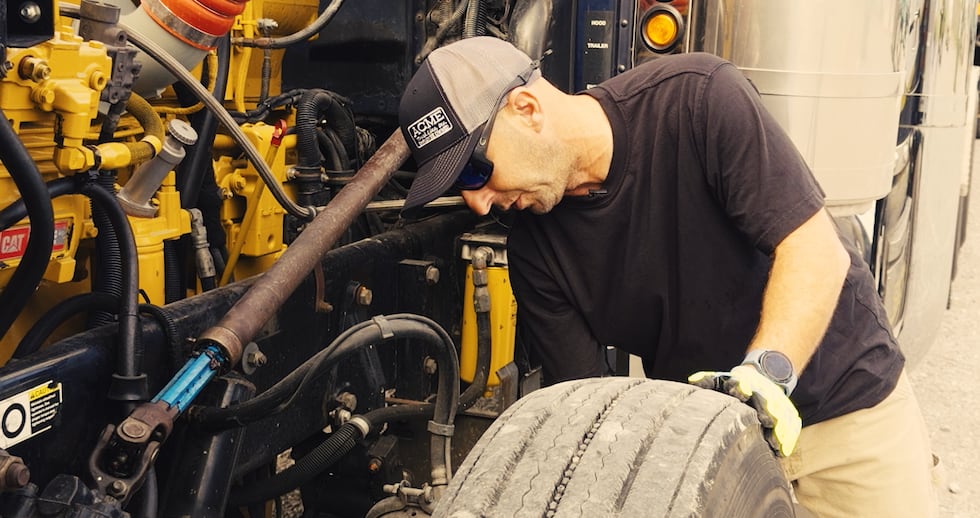
To avoid that, drivers like Tassin are required to do a pre-trip inspection of critical safety components, including tires, before they start their shift.
“Safety is fundamental to any trucking company,” said Tyler Coatney, president of Acme Truck, the mid-size carrier where Tassin works. “For tires, we look at the tread depth as well as any sort of bulging or wear on the tires, and they also do check inflation as well.”
As Tassin showed InvestigateTV his inspection procedure, he found one of his two front steer tires was low on air.
“That’s a low tire. It needs to be at, at least, 100 to 120 (PSI). I normally like to run about 110,” he said, before filling the tire to its proper inflation level.
The American Trucking Associations, the country’s largest national trucking trade association, says it emphasizes the importance of properly checking tires to drivers and companies.
Yet InvestigateTV analysis of federal data found that in 2024 and 2025, tire problems were the number one reason trucks received a violation that led to the vehicle being pulled out of service, with more than 250,000 vehicles cited across those two years.
Of those violations, roughly 84% were for flat, leaky or under-inflated tires — a condition NHTSA research found makes a tire significantly more likely to be cited as a critical event in a crash.
Tire monitoring systems not required
Kurdock, with Advocates for Highway and Auto Safety, pointed out those numbers only reflect the trucks that federal inspectors examined in a scenario where a violation could be issued, such as at a weigh station or during a traffic stop.
While all registered motor carriers are required to receive an annual inspection for minimum standards, those inspections can be done in-house or through a third party, and any deficiencies found are corrected without a violation being logged in the data reviewed by InvestigateTV.
“It’s a very small snapshot because a very small percentage of trucks are actually being inspected,” Kurdock said of the data. “So the problem is likely much larger than what we’re seeing.”
While drivers are required to conduct pre-trip inspections to look for issues like underinflated tires, Kurdock says there are other potential safety measures that could be put in place that are already used by some trucking firms that would catch and potentially mitigate issues that develop while on the road: tire pressure monitoring or management systems and automatic or central tire inflation systems
“There are systems out there that can maintain the pressure of a tire, while it’s traveling. And that can be a really important safety advance,” Kurdock said.
VIGIA's automatic tire pressure monitoring and inflation system is an example of the safety technology experts like Pete Murdock say can help prevent tire blowouts and the resulting crashes.
Tire pressure monitoring systems provide real-time monitoring of tire pressure and can produce a dashboard alert. Passenger cars and light duty trucks have been required to have this technology under federal motor vehicle standards since 2007, but large trucks are typically exempted.
Installing an automatic or central inflation system can allow for easy adjustments to tire pressure in response to changes in conditions such as temperature and hauling load. Kurdock said some in the industry have voluntarily begun using these technologies, especially on newly-manufactured trucks, and the Commercial Vehicle Safety Alliance — an industry nonprofit trade association — has issued guidelines for how operators can effectively implement them, and updated its own out-of-service criteria for inspections to allow for trucks with tire leaks to stay on the road if they have them installed.
When asked why they are not required in large trucks, Kurdock said that was a “good question” for the U.S. Department of Transportation.
“It’s something they should be looking at,” Kurdock said.
NHTSA research documents show the agency has at least researched TPMS and other tire pressure systems in the past.
However, InvestigateTV contacted both federal trucking regulators and NHTSA — the agencies within Transportation Department that would regulate the use of such devices — and the responding spokespersons said there are currently no rulemakings underway regarding requirements for tire pressure monitoring systems or automatic tire inflation systems in large trucks.
‘I’d be lying if I told you I wasn’t angry’
Those solutions may not help with accidents caused by defective tires.
Attorney Rob Ammons, who is representing Walsh in a wrongful death lawsuit, said litigation can effectively force companies to improve their products where federal regulations do not.
“Companies understand that when they don’t build safe products, if it costs them money, they’ll devote the resources to build safe products,” Ammons said.
In the complaint filing, Walsh and his family’s estate allege the tire that failed and caused the crash, which was manufactured by Goodyear, had two defects: a faulty inner liner and steel belts that didn’t fuse together the way they should have.
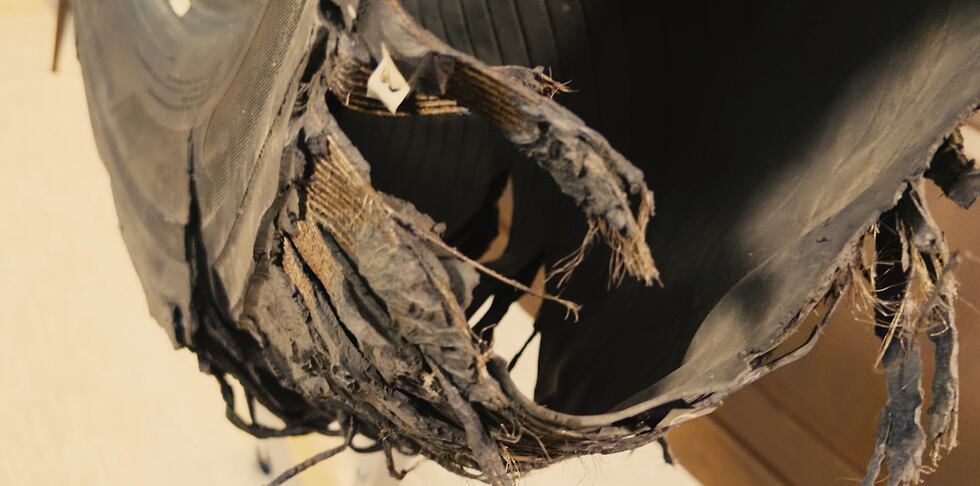
“We look at the tire and we can see the telltale signs of defects in it,” Ammons said.
He said a normal inner liner — a layer designed to keep air inside the tire — should be of uniform thickness, but the tire on the truck that hit the Walsh’s vehicle had a defect that looks almost like a thumbprint in the liner.
“It creates this an area where this rubber, which is supposed to hold the air in place, is way too thin, and the air is able to migrate through that inner liner into the structure of the tire,” Ammons said.
Ammons said that air can then push the tire’s layers apart, putting pressure on the steel belts.
“Suddenly the tire separates inside. The inside comes apart as the vehicle’s traveling down the highway at 70 miles per hour,” Ammons said.
Asked for a response, Goodyear said in an email that the company does not comment on pending litigation.
In court filings, Goodyear has denied its tire was “defective or dangerous in design and manufacturing.” The company blamed truck operators, who are also named in the lawsuit, for “the tire being run in an overloaded and/or underinflated state” and said the truck driver didn’t keep the tire properly inflated.
Attorneys for the trucking company, Roadjet Transportation, Inc., did not respond to multiple requests for comment. The driver of the truck, reached by phone, said he could not comment due to the pending litigation.
In court filings, RoadJet denied responsibility for the Walsh crash. It also concurred with a filing from Derick Walsh’s attorneys, responding to a Goodyear motion, that said the tire “showed no evidence of inadequate inflation”, and that RoadJet “received the highest possible government safety ratings 25 days before the crash, with zero tire violations across its entire fleet’s history.”

Standing on the porch of the cottage his parents experienced less than a year of their dream to live in, Walsh said he still struggles to deal with the loss of his family.
“I’d be lying if I told you I wasn’t angry,” he said.
“The first few years was really rough. There’d be times where I couldn’t get out of bed … I’d just lay in bed for, like, a week at a time,” he said. “But I kind of think about what my parents taught me, of never giving up and going through adversity, and I know that’s not what they’d want from me.”
Now working on furthering his education, Walsh said he is also working through his grief.
He takes care of the cottage, and said he is trying to move forward despite being surrounded by memories of a family that will never come home.
“It’s a constant reminder of, you can do everything the right way, and even if you do everything the right way and you work hard all your entire life, it can be taken away in an instant,” he said.
“And they were good. They were great people.”
Editor’s Note: An earlier version of this story misspelled Peter Kurdock’s name. We regret the error.
Copyright 2026 Gray Media Group, Inc. All Rights Reserved.